

The Togean (Togian) Islands in Sulawesi are not a “quick beach stop”. People come for reefs, quiet days, and a real offline break. This guide is decision-first: should you go, which island fits your style, and how to reach Wakai without messing up your route.
- Is the Togean Islands trip worth it for you?
- What to know before you book (cash, signal, comfort)
- My experience (2x Togeans): honest pros & cons
- Where to stay: Kadidiri vs Batudaka vs Malenge vs Una Una
- Best things to do (snorkeling, Jellyfish Lake, kayaking)
- How to get to the Togean Islands (Ampana/Gorontalo → Wakai)
- Simple itineraries (5 / 7 / 10 days)
- Packing list + mistakes to avoid
- FAQ
Is the Togean Islands trip worth it for you?
Yes, it’s worth it if you want: slow days, snorkeling/diving, simple beachfront bungalows, and you’re happy to be offline for a while.
Skip it (or shorten it) if you need: reliable Wi‑Fi for work, nightlife, daily “activities schedule”, or fast point-to-point transport. In the Togeans, travel time is part of the experience — and you need buffer days.
What to know before you book (cash, signal, comfort)
- Expect limited internet. Some places offer signal/Wi‑Fi at extra cost, but do not plan on stable connections.
- Bring enough cash. Many payments are cash-based and logistics can get expensive if you need last‑minute private boats.
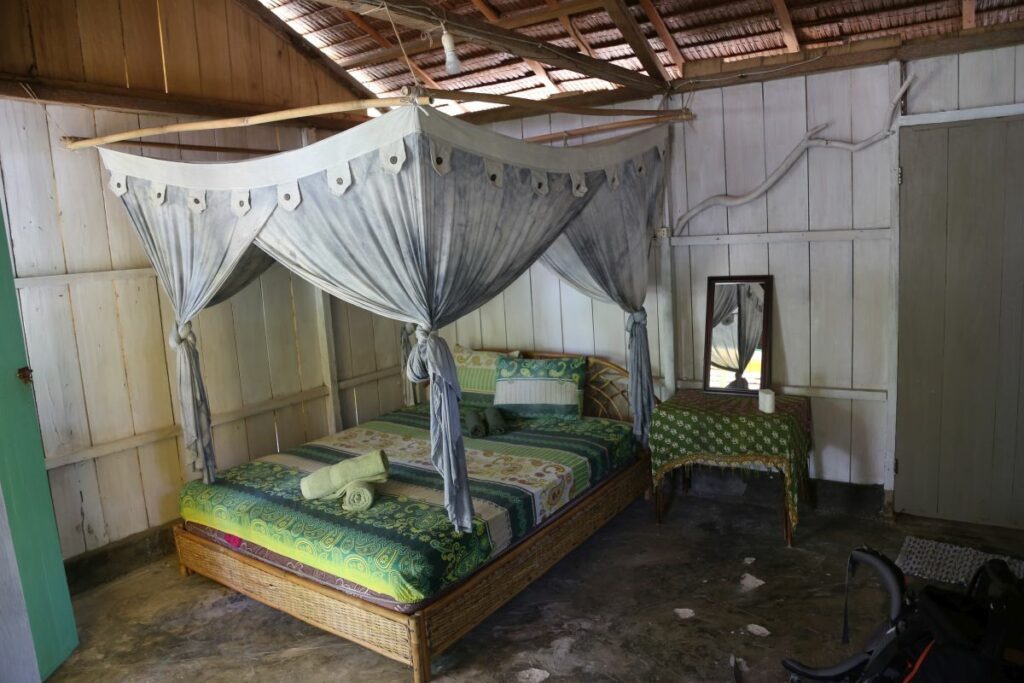
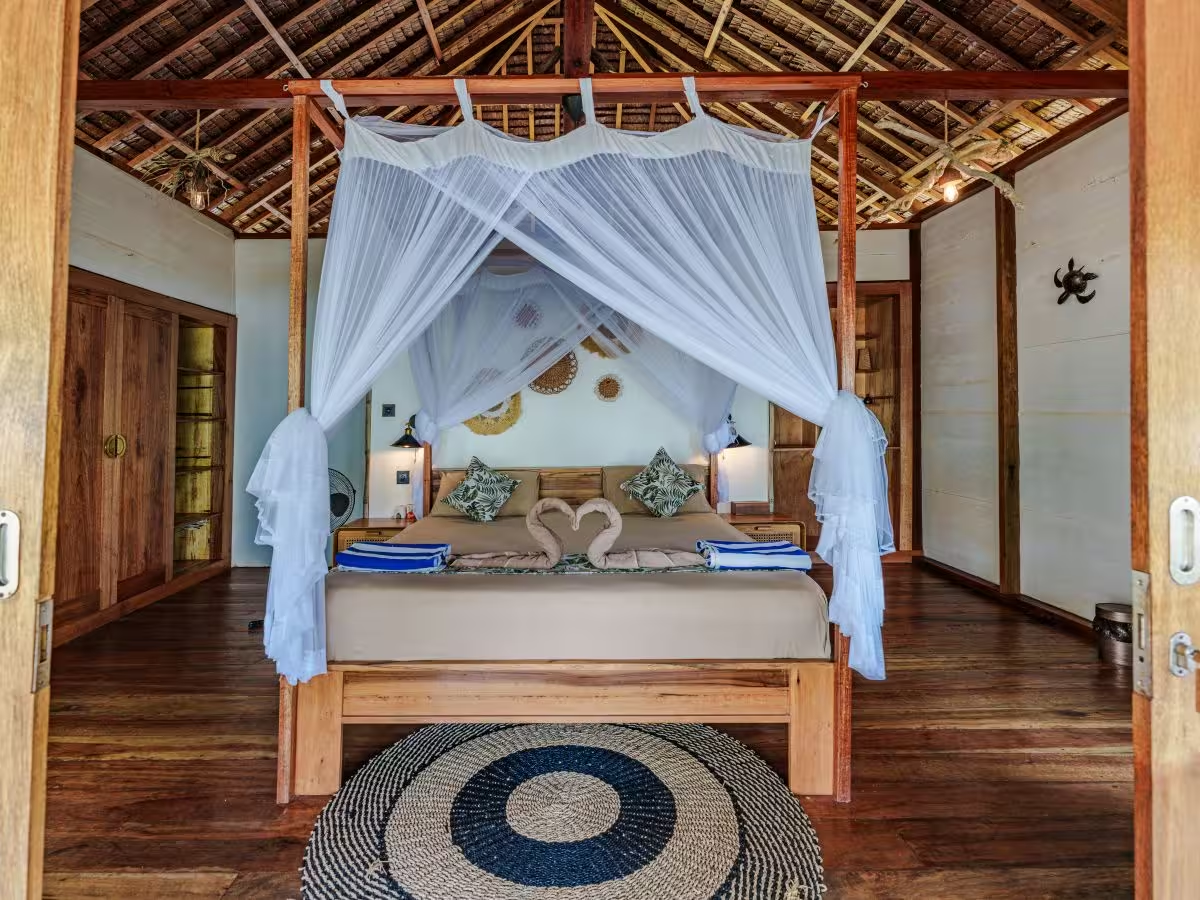
- Keep comfort expectations realistic. Many bungalows are simple: bed with mosquito net, small bathroom, hammock lifestyle.
- Boat schedules can change. Weather and demand affect departures—plan your route with flexibility.
- The #1 success factor is island choice. “Best” depends on your style: divers, snorkelers, or pure downtime.
My experience (2x Togeans): honest pros & cons
I’ve been to the Togean Islands twice and I’d go again. Important context: I’m a snorkeler (not a diver), so my recommendations focus on house reefs, boat trips, and overall atmosphere rather than dive logistics.
Kadidiri: great location, but a bit more “commercial”
I stayed at Kadidiri Paradise and Harmony Bay and also checked out the other stays on the island. Both have a beautiful setting and can work well for divers. The food was genuinely good. The only downside for me personally: both places felt a bit more “commercial” compared to smaller, more low-key options elsewhere.

Batudaka (Bomba): Poki‑Poki was my all‑time favorite
My all‑time favorite stay was Poki‑Poki (near Bomba village on Batudaka). The manager was incredibly welcoming and had a talent for making guests feel relaxed — without charging extra for every small thing. There was a kayak on the beach: I could simply hop in and explore mangroves and empty stretches of coast.
I really wanted to spot a coconut crab (one of those iconic “wow” creatures people associate with remote islands) and the manager actually helped me find one and showed it to me. With only around 7 huts, it never felt crowded. We booked the simplest bungalow and were totally happy with it.

Where to stay in the Togean Islands: pick your base
There is no single “place to be” in the Togeans. Choose based on what you want your days to look like. Here’s the quick decision guide.
Kadidiri: easiest logistics + classic reef days
Choose Kadidiri if you want a straightforward base near Wakai, with multiple resorts and easy access to organized snorkeling/diving trips. It’s “touristy” only by Togean standards (not mass tourism).
Typical fit: first‑timers, divers, travelers who want convenience.
Batudaka (Bomba): laid‑back freedom + mangroves
Choose Batudaka/Bomba if you want a more independent vibe: paddling, exploring, fewer resort clusters, and a “live slow” feel.
Typical fit: couples, solo travelers, anyone craving quiet + simple days.
Malenge: popular stop if you want calm bays and island-hopping
Malenge is a common choice on many routes. I didn’t make it there on my trips because other islands felt more attractive to me — but that’s personal taste. If you want another base beyond Kadidiri/Batudaka, Malenge can be worth considering.
Una Una: diver-focused, more remote (often pricier transfers)
Una Una is the volcanic island option and is especially popular with divers. Because it’s farther out, transfers can be more expensive and you should plan logistics carefully.
Katupat: mainly for Jellyfish Lake (often as a day trip)
Katupat is best known for Mariona Jellyfish Lake. Many travelers visit it as an organized trip rather than staying on Katupat itself.
Private-island resort option (Buka Buka Island):
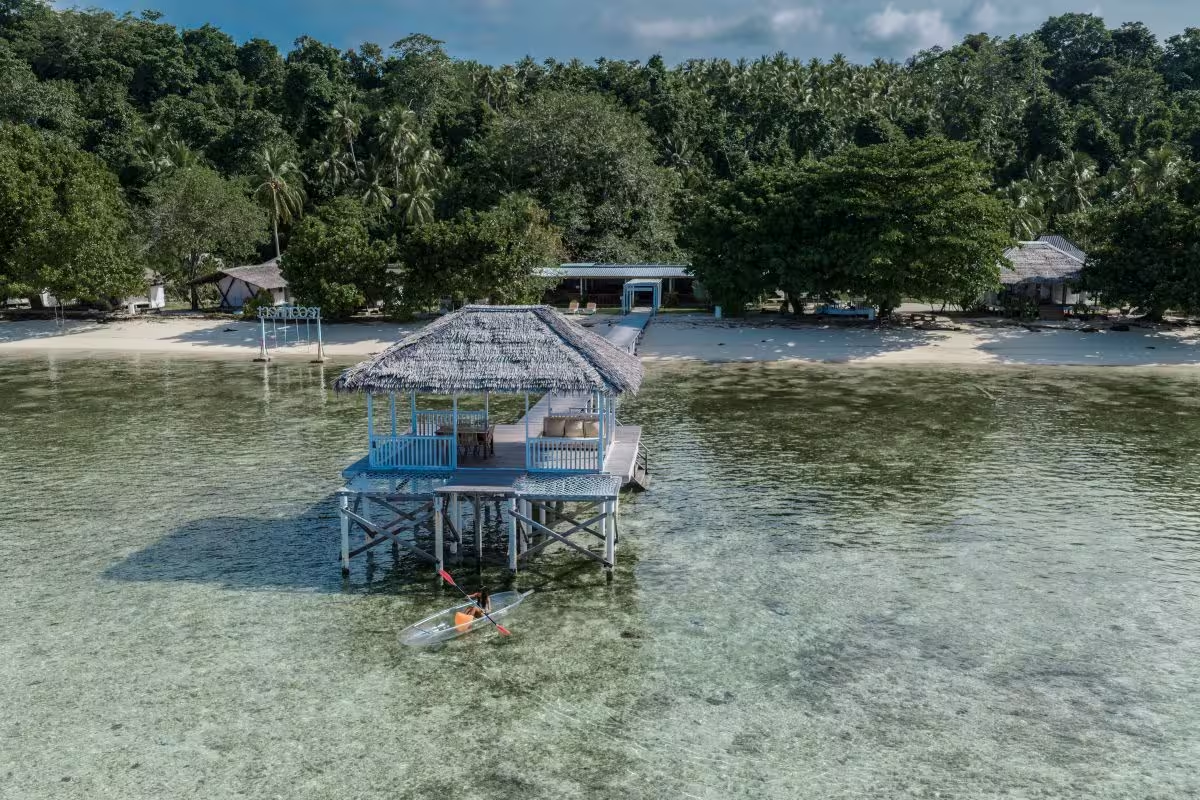
If you are looking for more of a resort setup in the Togians — more “private island” than backpacker bungalow — Reconnect Private Island Resort on Buka Buka Island could be an interesting option. Transparency note: I have not been there myself yet and am mentioning it as part of a collaboration. I see it as a good shortlist option, especially if you want to combine comfort with island seclusion. It is also worth noting that the resort organizes transfers and boat shuttles, which may be helpful if you would rather not piece together every leg of the journey yourself.
Best things to do in the Togean Islands (what’s actually worth it)
1) Snorkeling & diving: start with your house reef
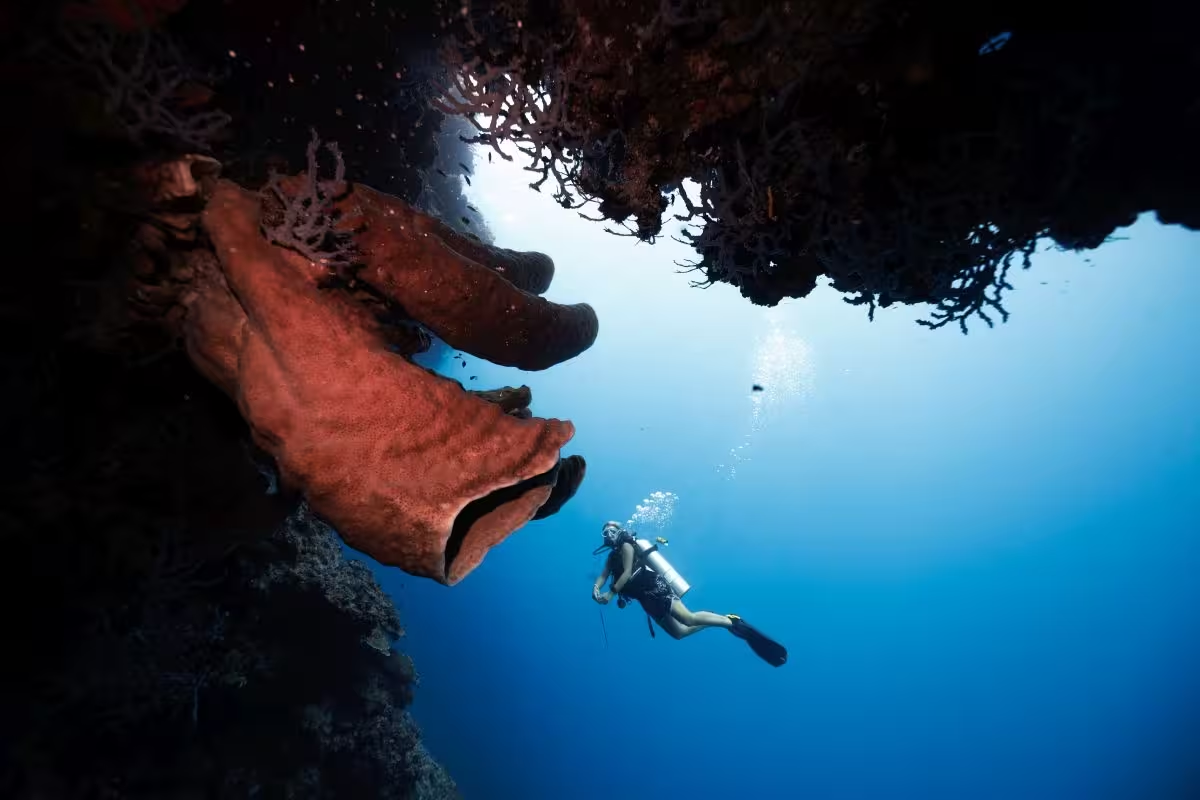
Most accommodations can arrange reef trips (or connect you with a partner dive stay). My tip as a snorkeler: check your house reef first. If it’s great, you can keep costs down and still get amazing water time. If not, book 1–2 boat days for better spots.
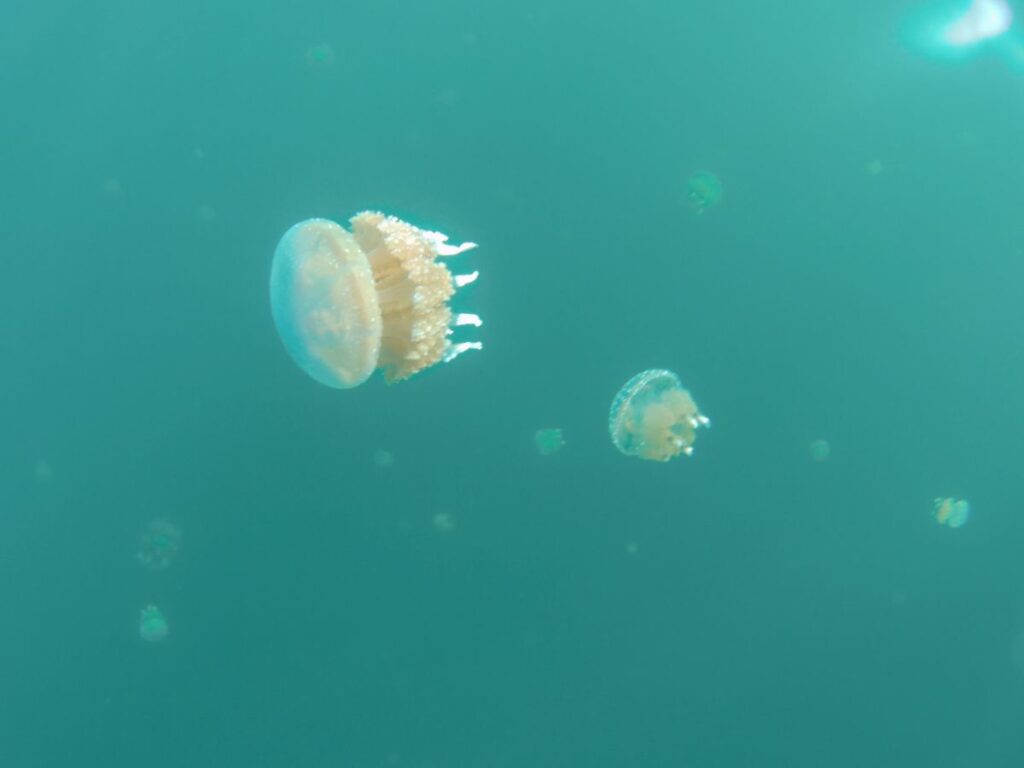
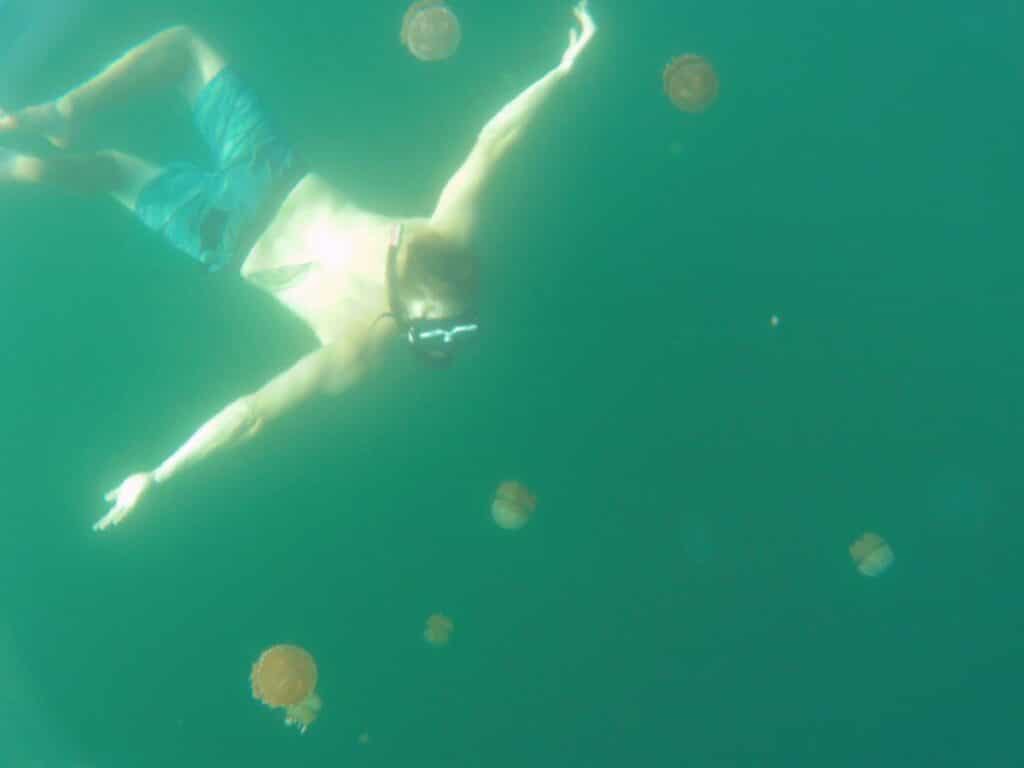
2) Mariona Jellyfish Lake (Katupat): the surreal highlight
Swimming among thousands of jellyfish in Mariona Lake is the “signature” experience for many people. But please do it responsibly: no sunscreen or lotions, no fins, gentle movement, and don’t touch the animals. The lake’s ecosystem is fragile.
3) Kayak, mangroves, empty beaches
If your accommodation has kayaks, use them. It’s one of the easiest ways to find quiet bays, paddle through mangroves, and explore coastline without booking a full tour.
4) Night wildlife spotting (if offered)
Some places offer simple night walks/spotting trips. If you’re interested in seeing rare creatures (like coconut crabs), ask your host what’s possible and what’s ethical — no stress for animals, no chasing, no handling.
How to get to the Togean Islands (Ampana/Gorontalo → Wakai)
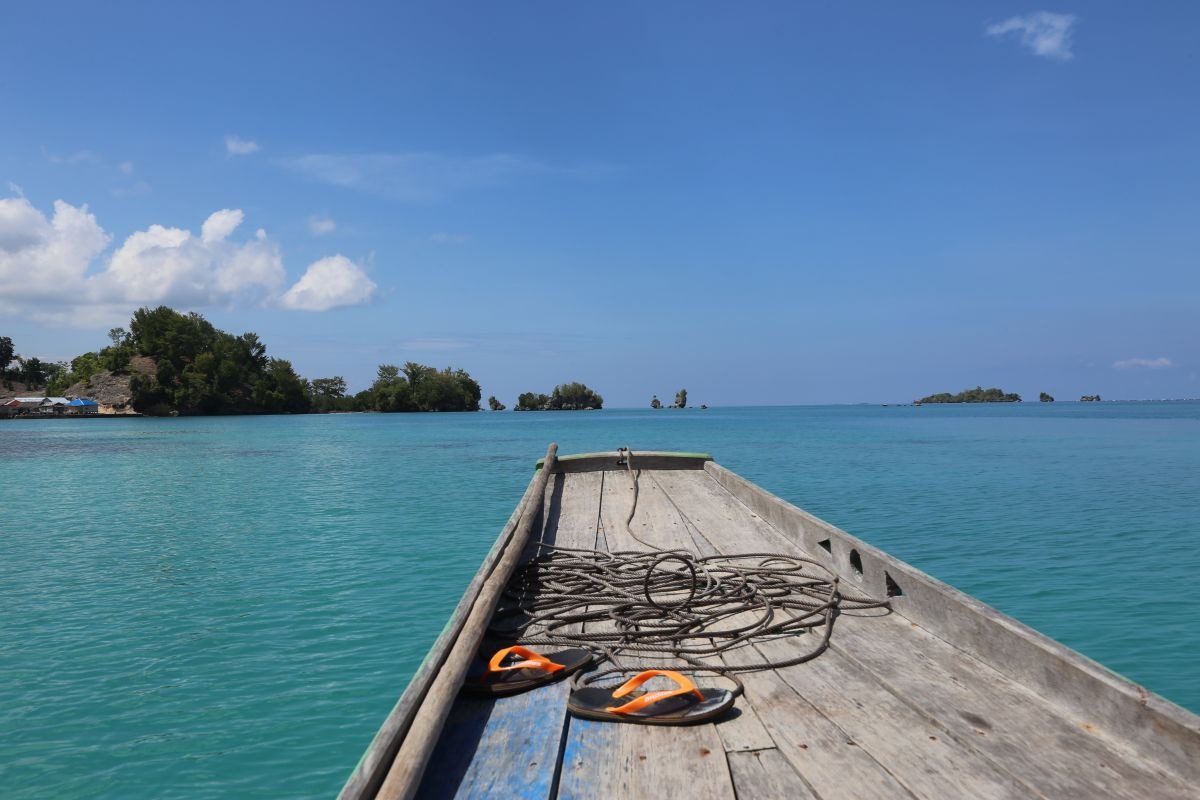
Wakai is the main harbor town and the most common entry point. In practice, you reach Wakai by boat from one of two gateways:
- Gorontalo (north) → overnight ferry to Wakai
- Ampana (south) → speedboat or ferry to Wakai
Option A: Gorontalo → Wakai (overnight ferry “Tuna Tomini”)
This route is a classic if you’re coming from North Sulawesi (e.g., Manado). It’s usually an overnight trip and feels like part of the adventure.
- Typical schedule: often runs twice per week (confirm locally).
- Trip time: roughly 12–13 hours.
- Comfort: basic sleeping spots are common; cabins cost extra but can help you rest.
Option B: Ampana → Wakai (faster, often more departures)
If you’re coming from Central Sulawesi (or you want a faster approach), Ampana is the most convenient gateway for many travelers. Speedboats are usually the quickest option, while ferries are slower but can be cheaper.
- Speedboat: commonly the fastest way; some departures may depend on passenger numbers.
- Public ferry: slower, but useful if you prefer a more budget-friendly ride.
From Wakai to your island / resort
Once you arrive in Wakai, you either take a public boat or (more commonly) your accommodation arranges a pickup. Ask your accommodation in advance what time they can pick you up and what it costs — this is where people often underestimate logistics.
How to avoid schedule stress (the realistic approach)
- Build buffer days before flights or long onward travel.
- Confirm schedules twice: once online (rough plan), then again at the harbor / via your accommodation.
- Don’t “same-day connect” from a ferry arrival to a must-catch bus/flight unless you have a backup.
Simple itineraries that work (without rushing)
5 days (one base)
- Base: Kadidiri or Batudaka/Bomba
- Plan: 3 relaxed days + 1 boat trip day + 1 buffer day
7 days (best balance for most travelers)
- Days 1–3: Batudaka/Bomba (kayak + mangroves + quiet beaches)
- Days 4–6: Kadidiri (reef time + organized trips)
- Day 7: buffer + transfer day
10 days (add Jellyfish Lake + more slow time)
- Days 1–4: Batudaka/Bomba
- Days 5–8: Kadidiri
- Day 9: Jellyfish Lake day trip (if available from your base)
- Day 10: buffer
Packing list + mistakes to avoid
What to pack (practical, not aesthetic)
- Enough cash for transfers + extra nights (buffer)
- Mosquito repellent + after-bite
- A well-fitting snorkel mask (optional, but worth it if you snorkel a lot)
- Water shoes (reef/rocky entries)
- Headlamp + power bank
- Dry bag for boat days
- Reef-safe sunscreen (and remember: for Jellyfish Lake it’s often “no sunscreen at all”)
Common mistakes that ruin the vibe
- Overplanning: tight onward connections are risky with boats.
- Counting on Wi‑Fi: plan offline and treat any internet as a bonus.
- Choosing the wrong base: pick the island that matches your style (diving vs total downtime).
FAQ: Togean Islands
At least 5–7 days on the islands because transport takes time. If you want two bases (e.g., Batudaka + Kadidiri), 7–10 days is ideal.
Kadidiri is easier logistically and dive-resort focused. Batudaka/Bomba feels quieter and more “free” (kayak, mangroves, slower days). If you can, split your trip between both.
Most travelers visit as a guided day trip arranged by their accommodation (often via boat). Follow local rules: no sunscreen/lotions, no fins, and no touching the jellyfish.
Don’t count on it. Bring enough cash and plan your Togeans stay as an offline destination. Ask your accommodation what they can provide (signal, generator hours, charging).
Generally, the drier months (often around May to September) bring calmer seas and easier boat travel. Weather varies, so keep buffer days in your route.
It’s basic. Many people sleep on simple mats or deck spaces; cabins cost extra and can be worth it if you value rest. Think “adventure transport”, not a cruise.